ChatGPT Ads vs Google Ads vs Meta: What Actually Differs for Advertisers
Three Platforms, Three Intent Capture Models
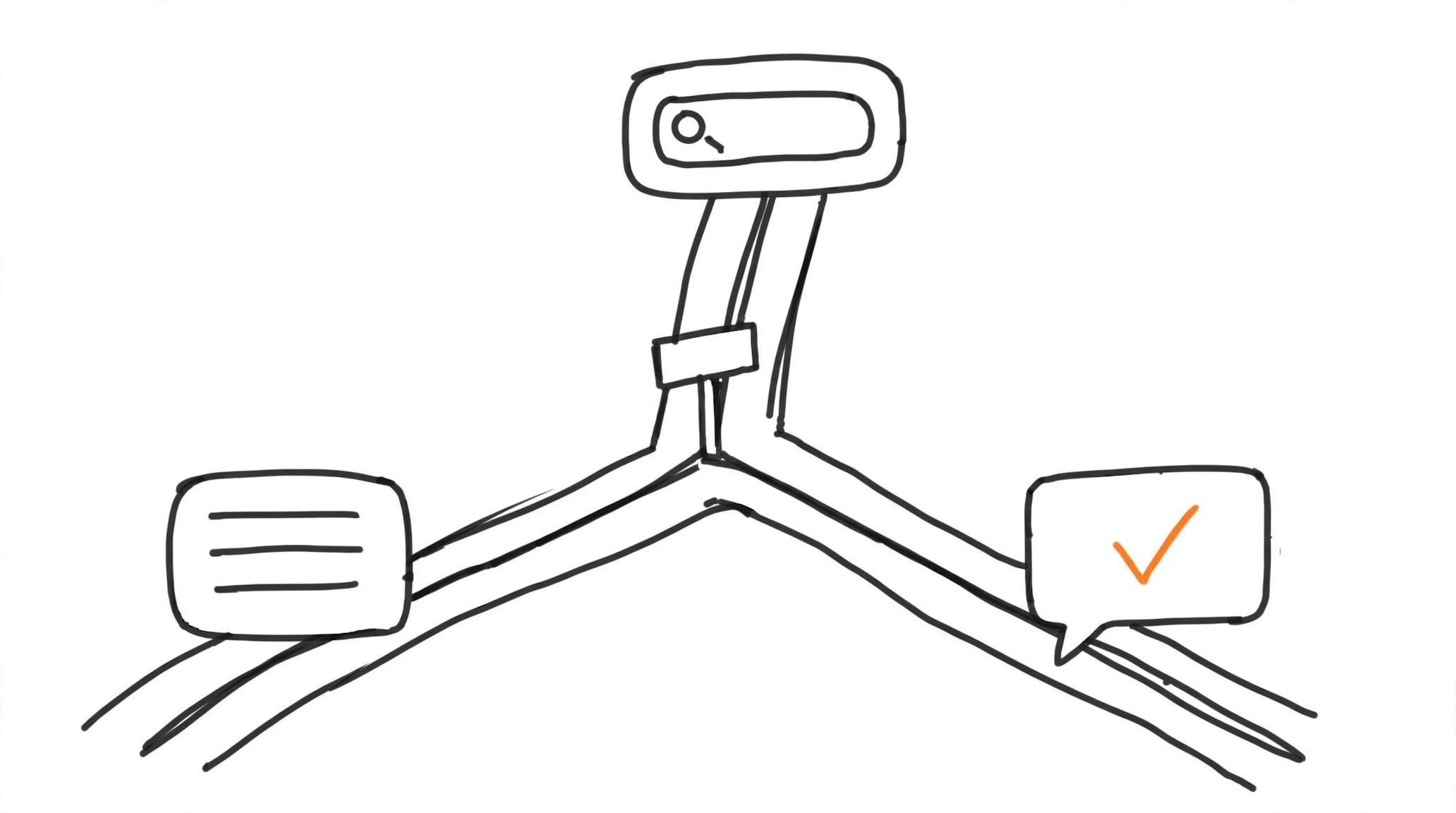
The comparison that matters is not which platform is better but what each one is actually selling. In the ChatGPT Ads vs Google Ads question, start with intent: Google Ads is built on query intent - advertisers bid on keywords, and the search query is the targeting signal. Meta is built on audience signals: demographic, interest, and behavioral data plus your custom audiences decide delivery. ChatGPT Ads, as covered in the targeting guide, sells neither keywords nor audiences as its primary signal - OpenAI's documentation describes delivery based on the context and intent of the user's current conversation, enriched by your creative, context hints, and campaign targeting. For a practitioner the practical consequence is sequencing: Google catches existing demand, Meta manufactures and widens it, and ChatGPT Ads reaches users mid-reasoning, before a query exists.
Targeting Primitives: Keywords, Audiences, Context Hints
The targeting toolkits reflect the models. Google's search campaigns revolve around keyword sets and match types. Meta revolves around audiences: interests, lookalikes, and uploaded customer lists, with exclusion controls. ChatGPT Ads sits structurally between them but with younger parts: geography runs at country level with US state, DMA, and ZIP granularity; platform targeting covers the iOS and Android apps plus web; custom audiences can be included or excluded per campaign; and the conversation-matching layer runs on context hints - descriptive text on the ad group, explicitly not keyword matching. Advertisers moving from Google should not expect query-level controls, negative keywords, or search term reporting; advertisers moving from Meta will find custom audiences familiar but interest targeting absent.
Billing and Budget Models
Google and Meta both grew layered budget and bidding systems over many years; ChatGPT Ads runs a smaller, younger set that is easier to state completely. Campaign objectives are CPM (Views, billed per thousand impressions), CPC (Clicks, billed per valid click), and oCPC (Conversions, billed per valid click while optimizing toward one conversion event), plus an automated Maximize results bid strategy at the ad group level. Budgets come as campaign-total or daily - with the daily budget averaged over a rolling seven-day period, capped at twice the daily amount per day and seven times per week, and a US minimum of $25 daily. OpenAI's guidance for CPC campaigns suggests starting bids in the $3-5 range per click, which is a useful calibration point against your Google CPCs even before ChatGPT-specific benchmarks exist.
Measurement Maturity: Where ChatGPT Ads Trails and Catches Up
The architectural story is similar across all three: a browser pixel plus a server-side API, deduplicated by a shared event or transaction ID. Meta's Conversions API is the mature reference the ChatGPT Ads measurement setup visibly mirrors, with years of ecosystem tooling around it; Google's stack carries its own mature conversion tooling. ChatGPT Ads's model has the same two-source shape but a younger surrounding ecosystem: conversions report with a 24-48 hour inclusion delay, view-through conversions report separately as a supplemental one-day metric outside the Conversions total, and there is no equivalent of years-accrued diagnostic tooling. The attribution window thinking transfers, but its parameters differ per platform and need re-checking rather than copying. For tracker users the practical meaning is that the discrepancy discipline learned on Meta applies unchanged - compare trends, not same-day totals.
Click IDs: gclid, fbclid, and oppref
Each platform marks its clicks: Google appends gclid, Meta appends fbclid, and ChatGPT Ads appends oppref - an opaque reference stored by the pixel in a first-party cookie and accepted in server-side events. The link tracking loss guide covers why these parameters vanish in badly built funnels, and every failure mode transfers: one redirect that rebuilds the URL without the parameter, and click-level attribution degrades to fallback matching. Tracker users face one extra gap today - RedTrack ships a ChatGPT Ads preset while Keitaro requires a manual source setup - so click ID preservation must be validated per platform rather than assumed.
Where Each Platform Belongs in the Stack
Google remains the tool for harvesting existing demand, Meta for scaling audiences, and ChatGPT Ads - the newest and smallest - for reaching users mid-decision in a channel competitors have not instrumented. That mix argues for a test allocation, and the deciding factor is measurement: a test channel without reliable conversion delivery produces cost data but no learnings. Set up the campaign structure and conversion pipeline first, start with budgets the attribution model can actually evaluate, and scale only what converts. MOST delivers tracked conversions server-side to ChatGPT Ads, Meta, TikTok, Reddit, Snapchat, and Pinterest from one postback, and the free Pixel Activator validates landing page tracking via pixel.way2.us before any of the three platforms gets budget.